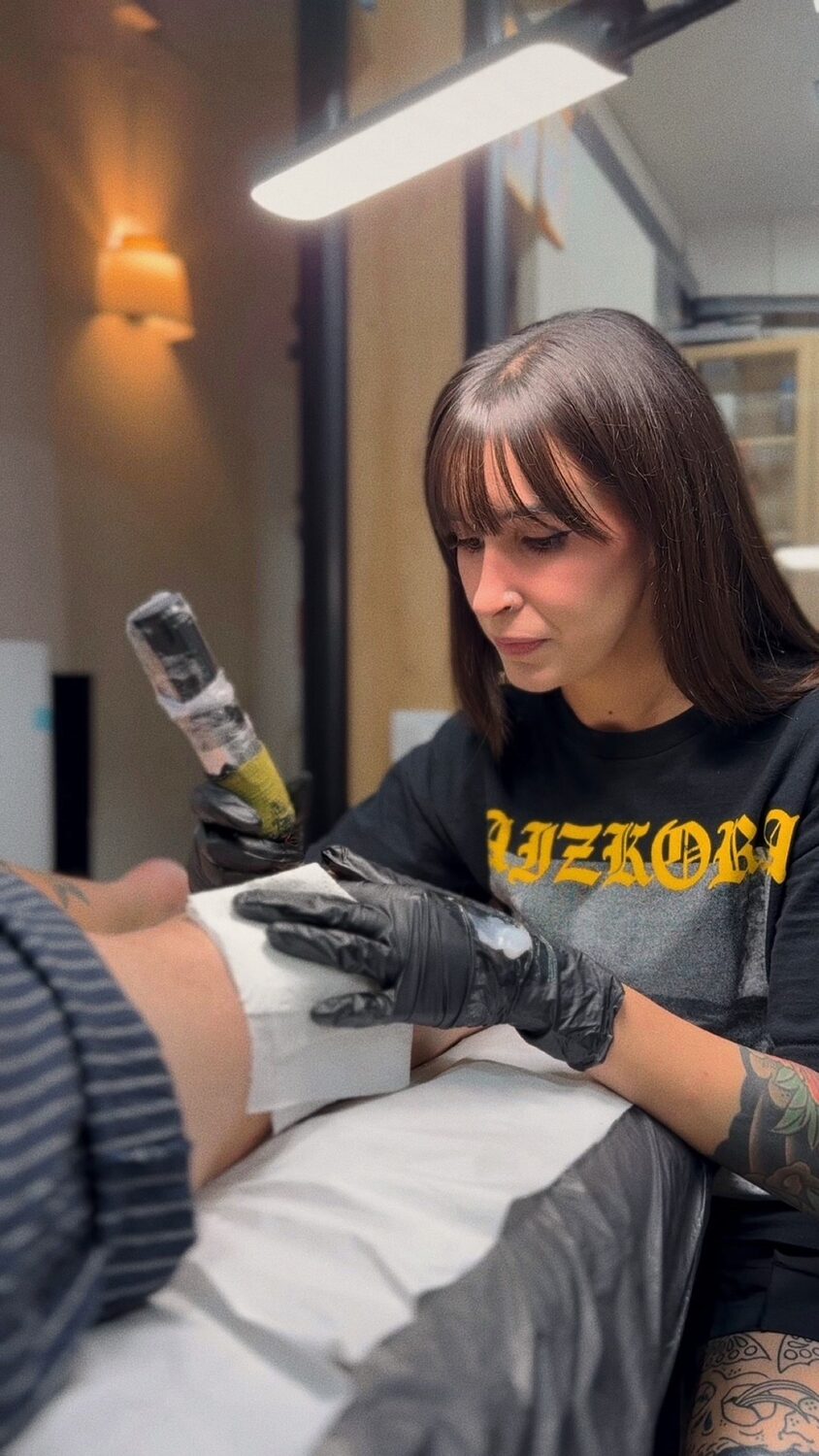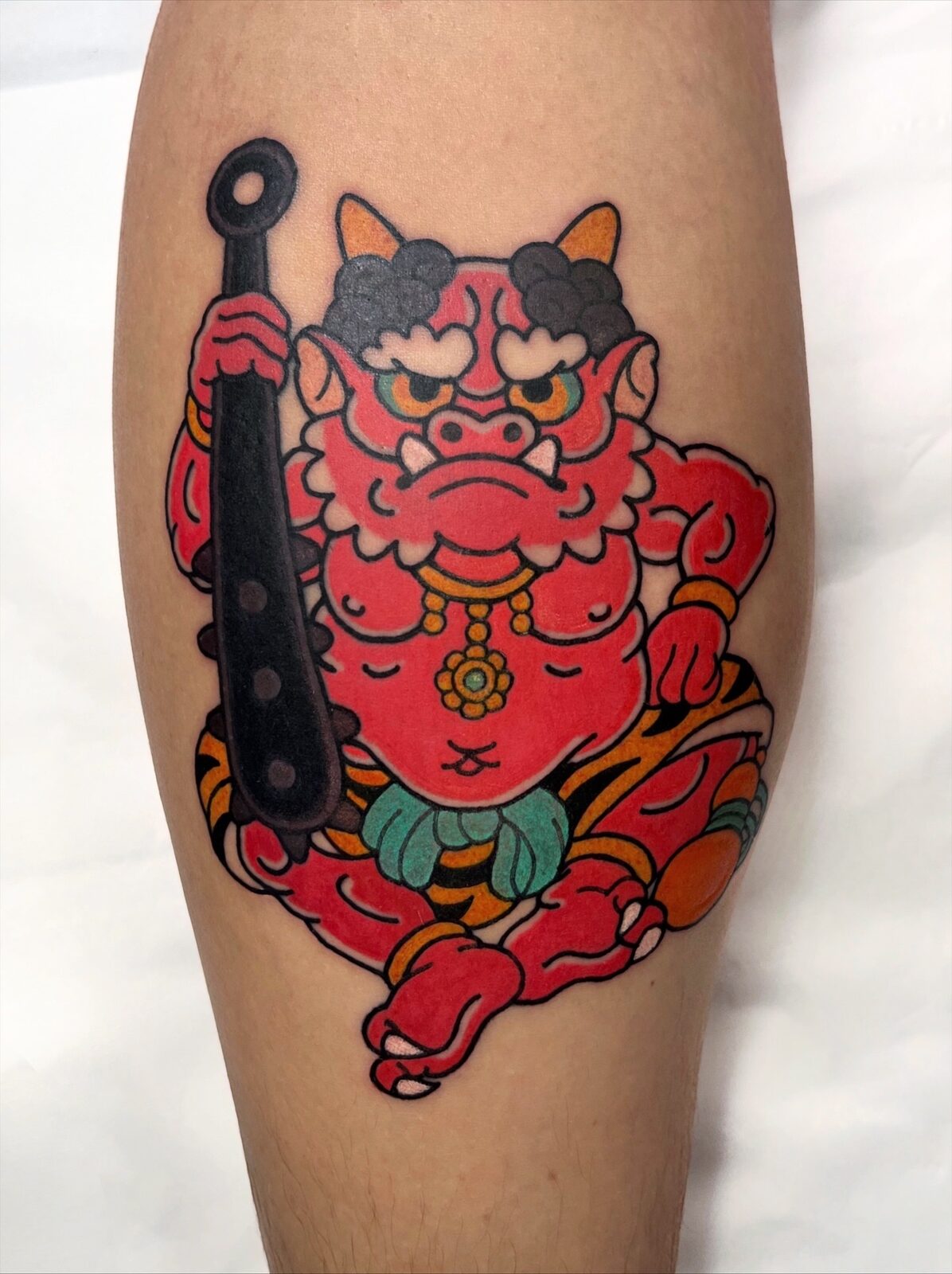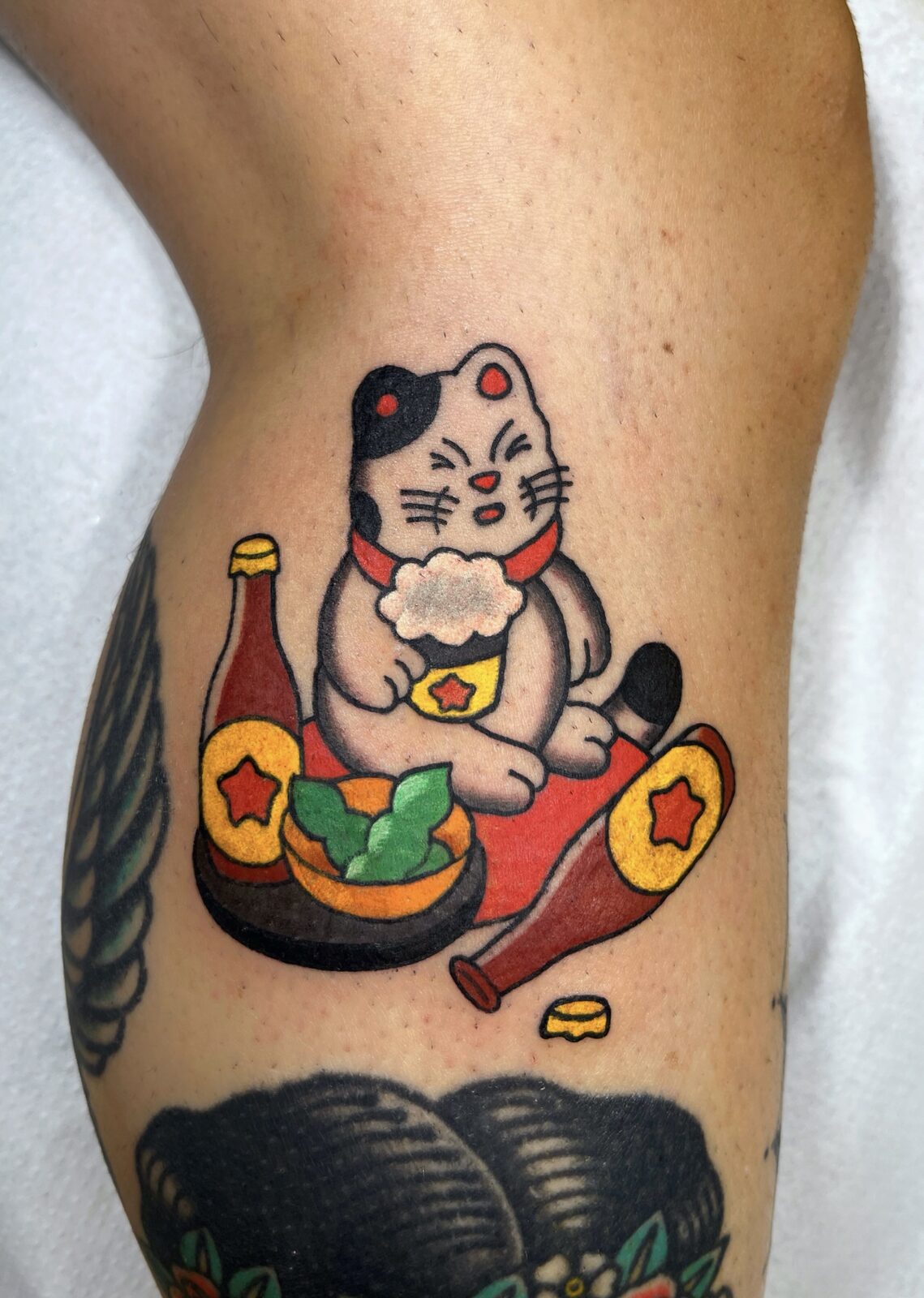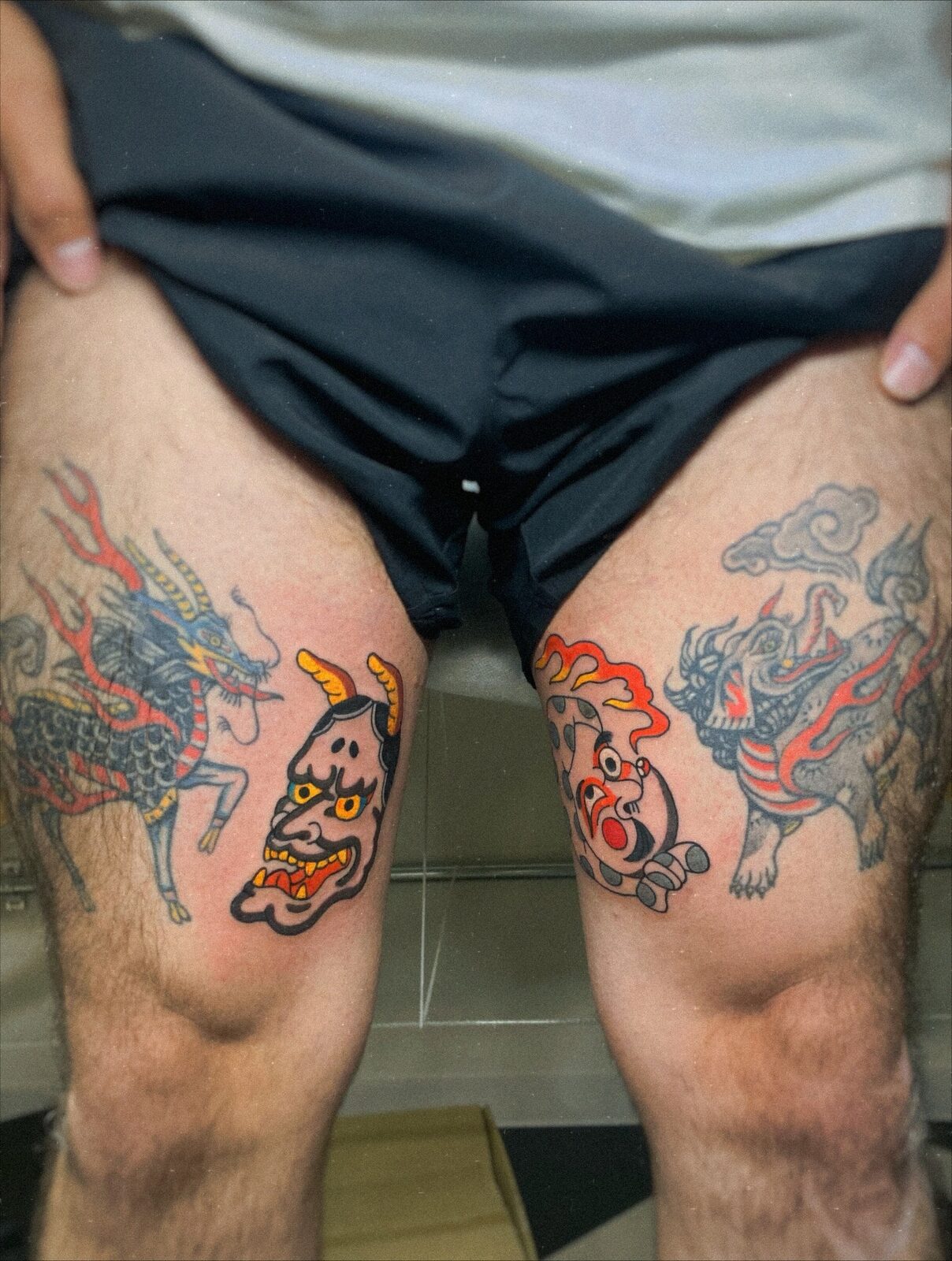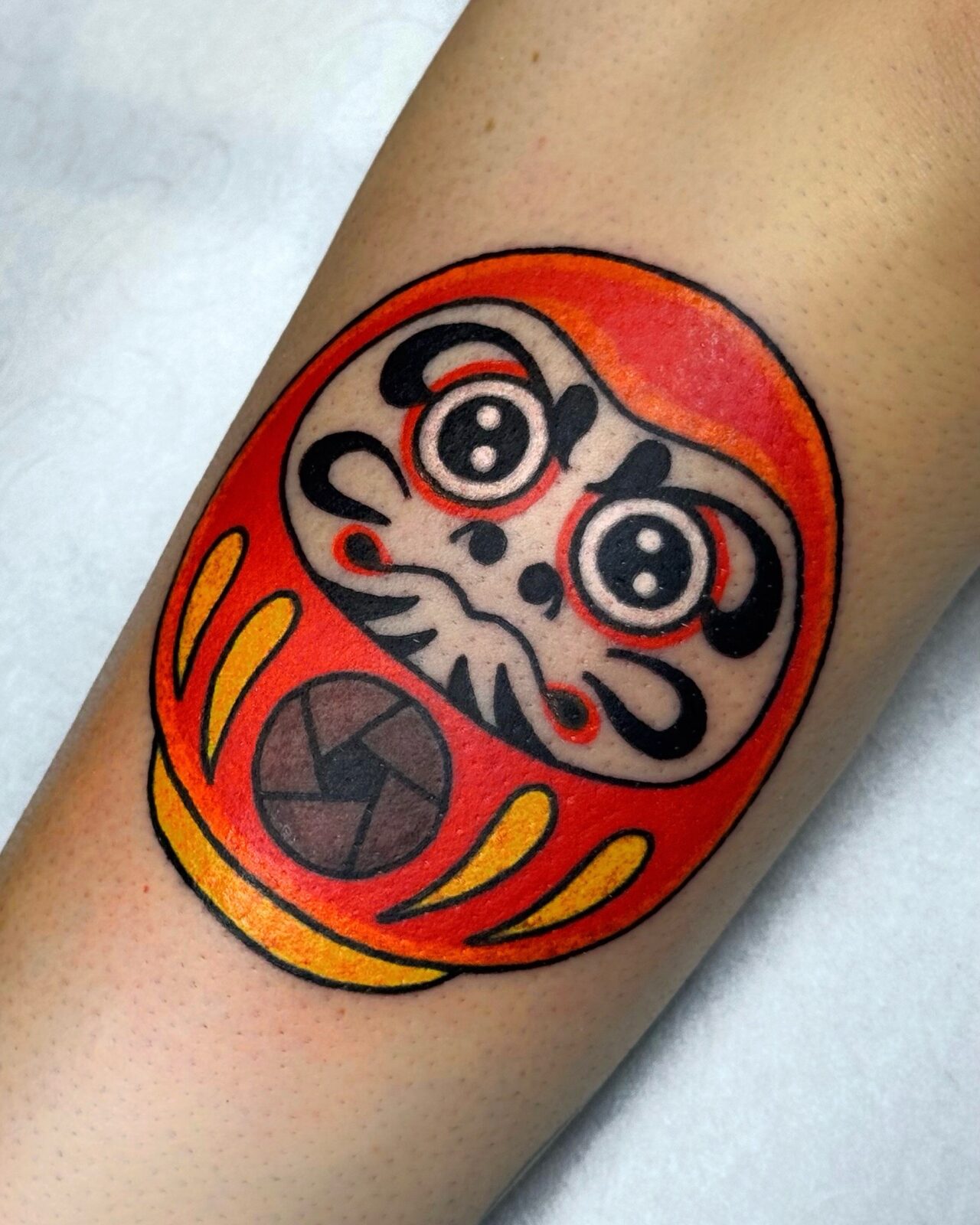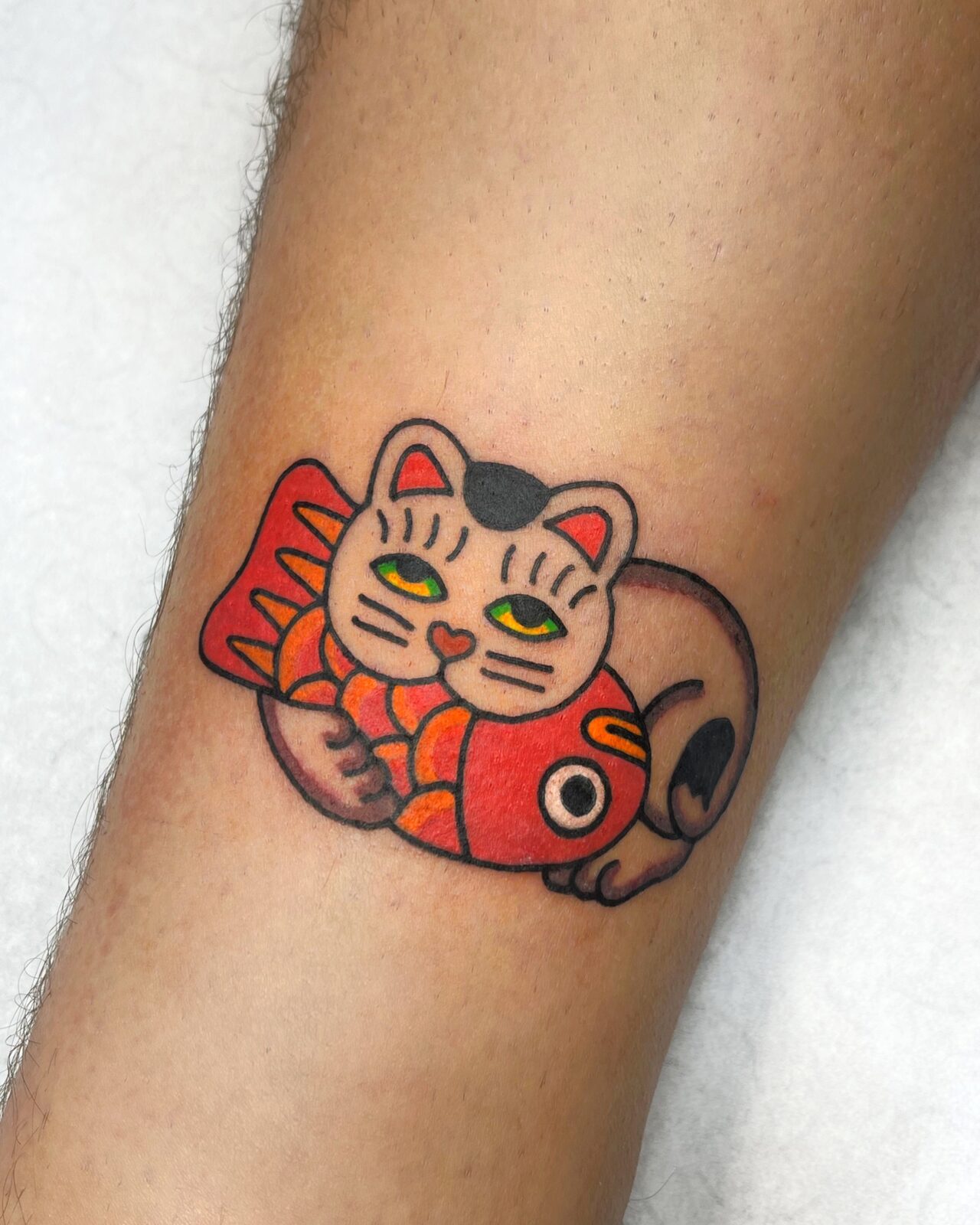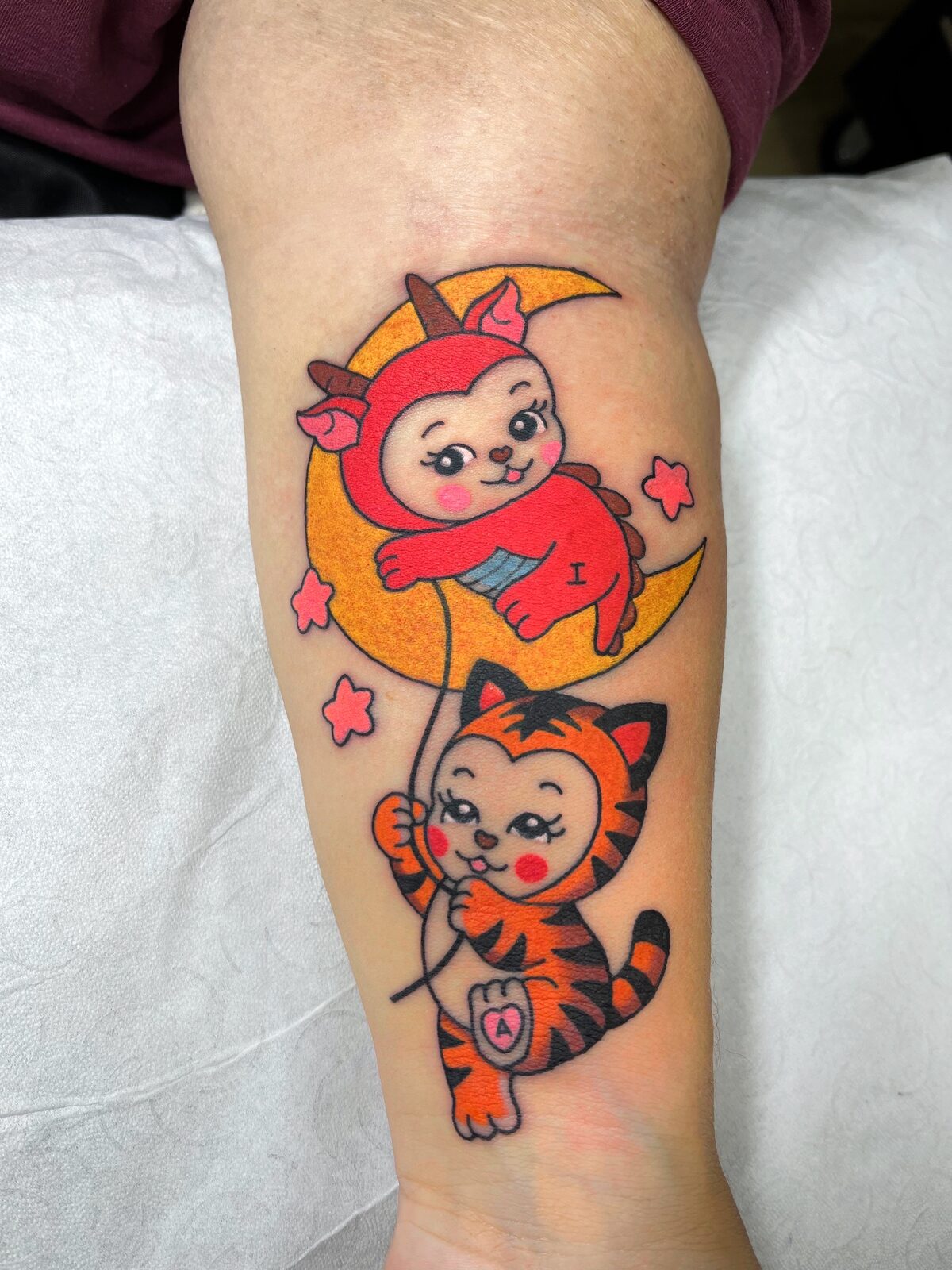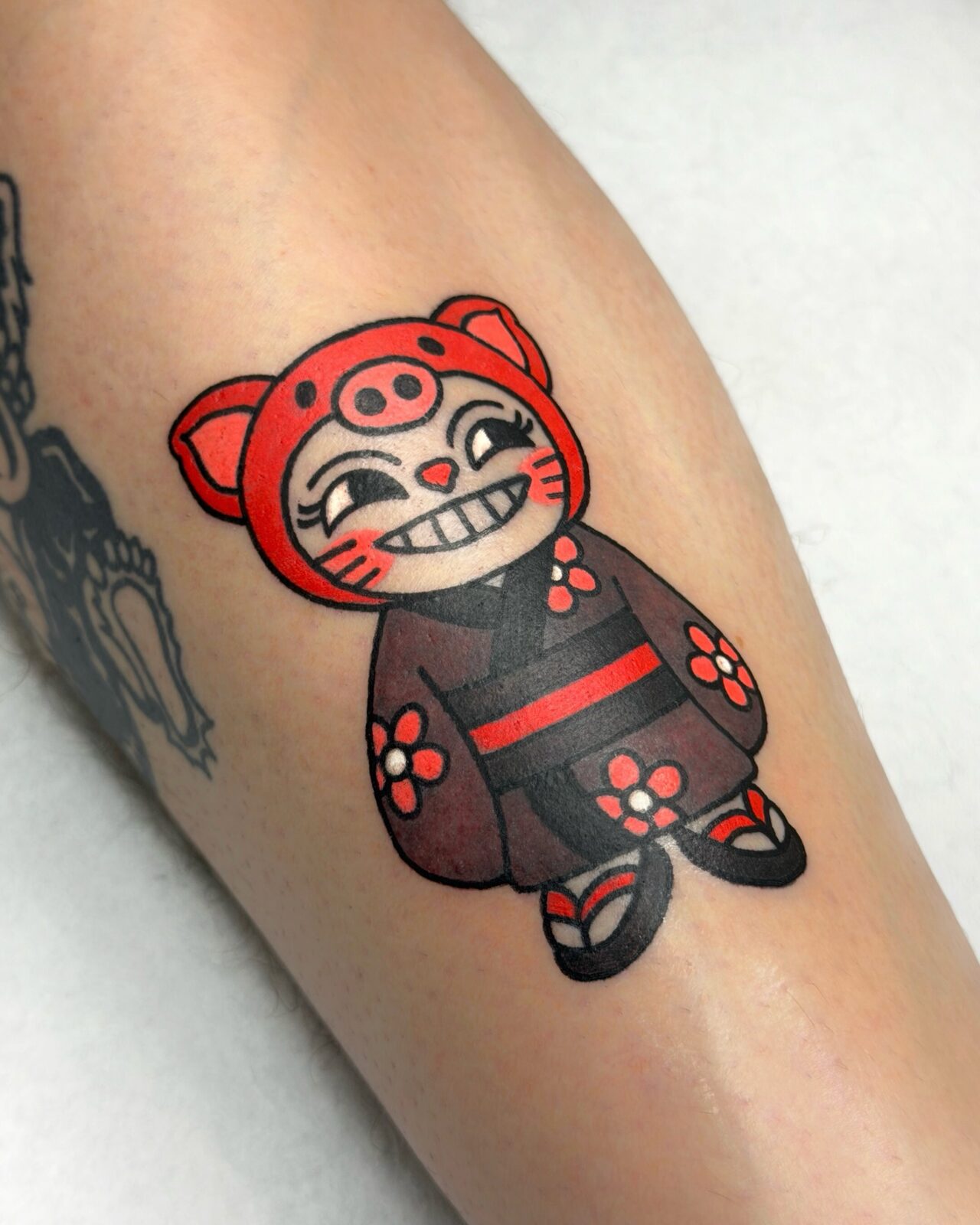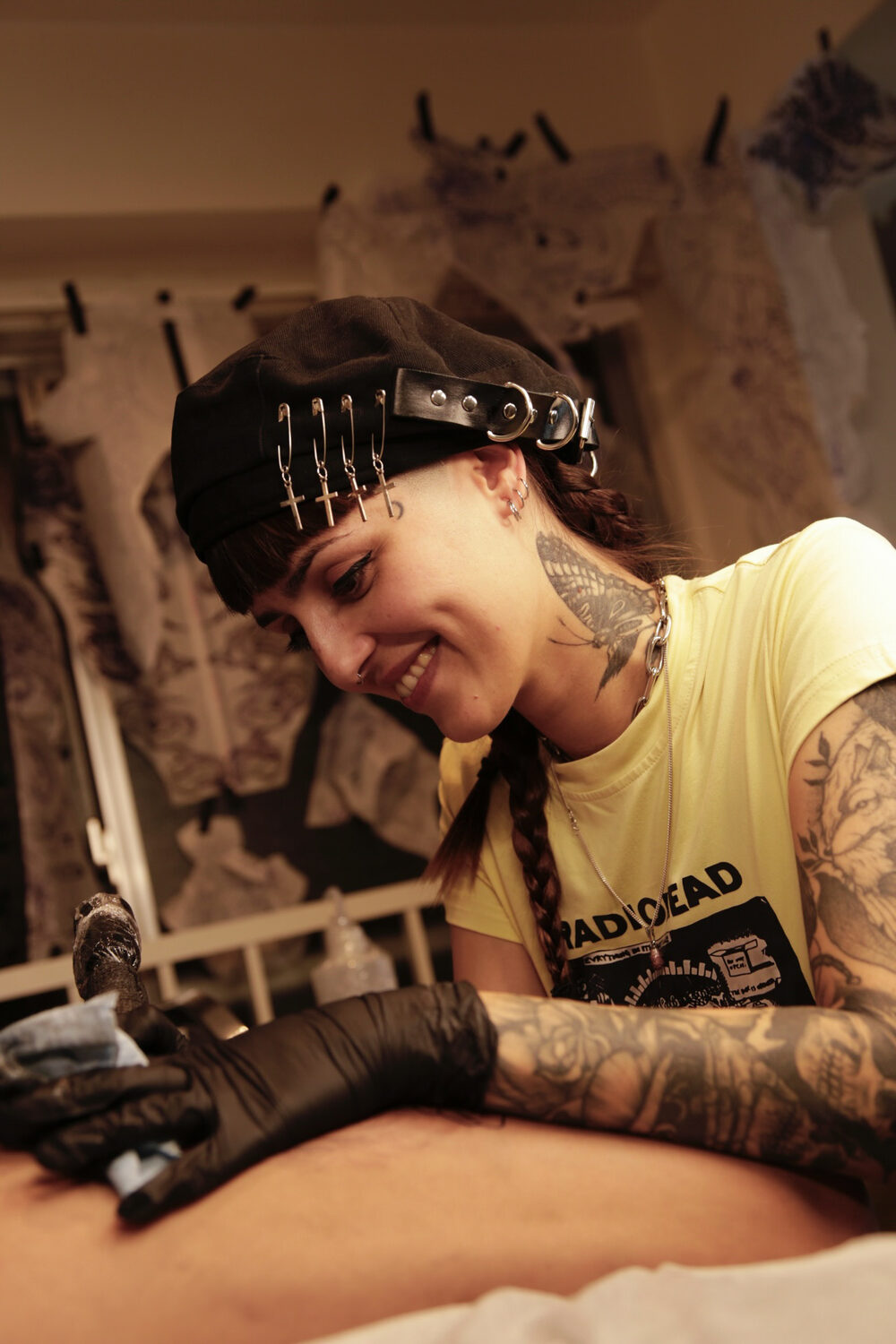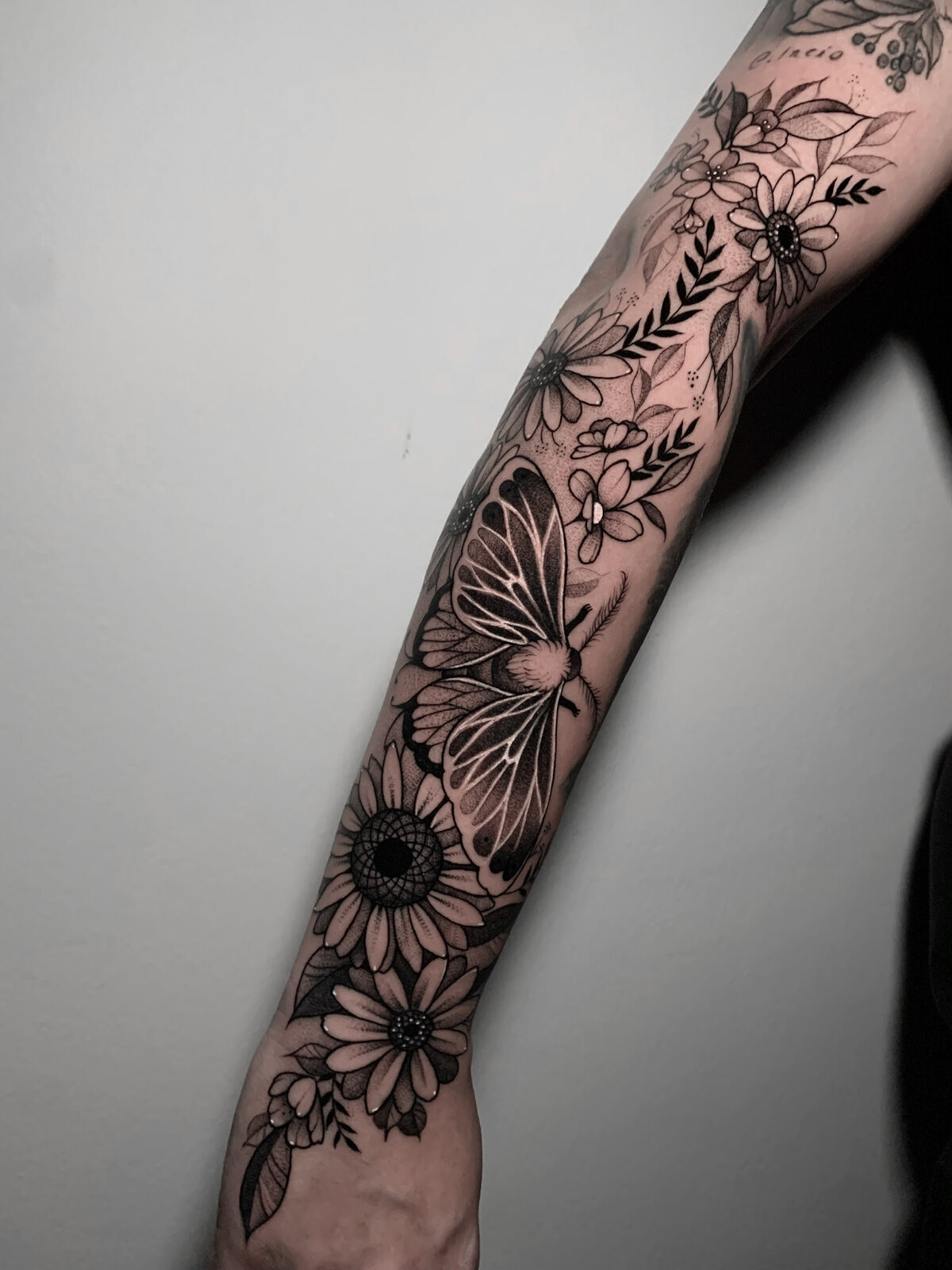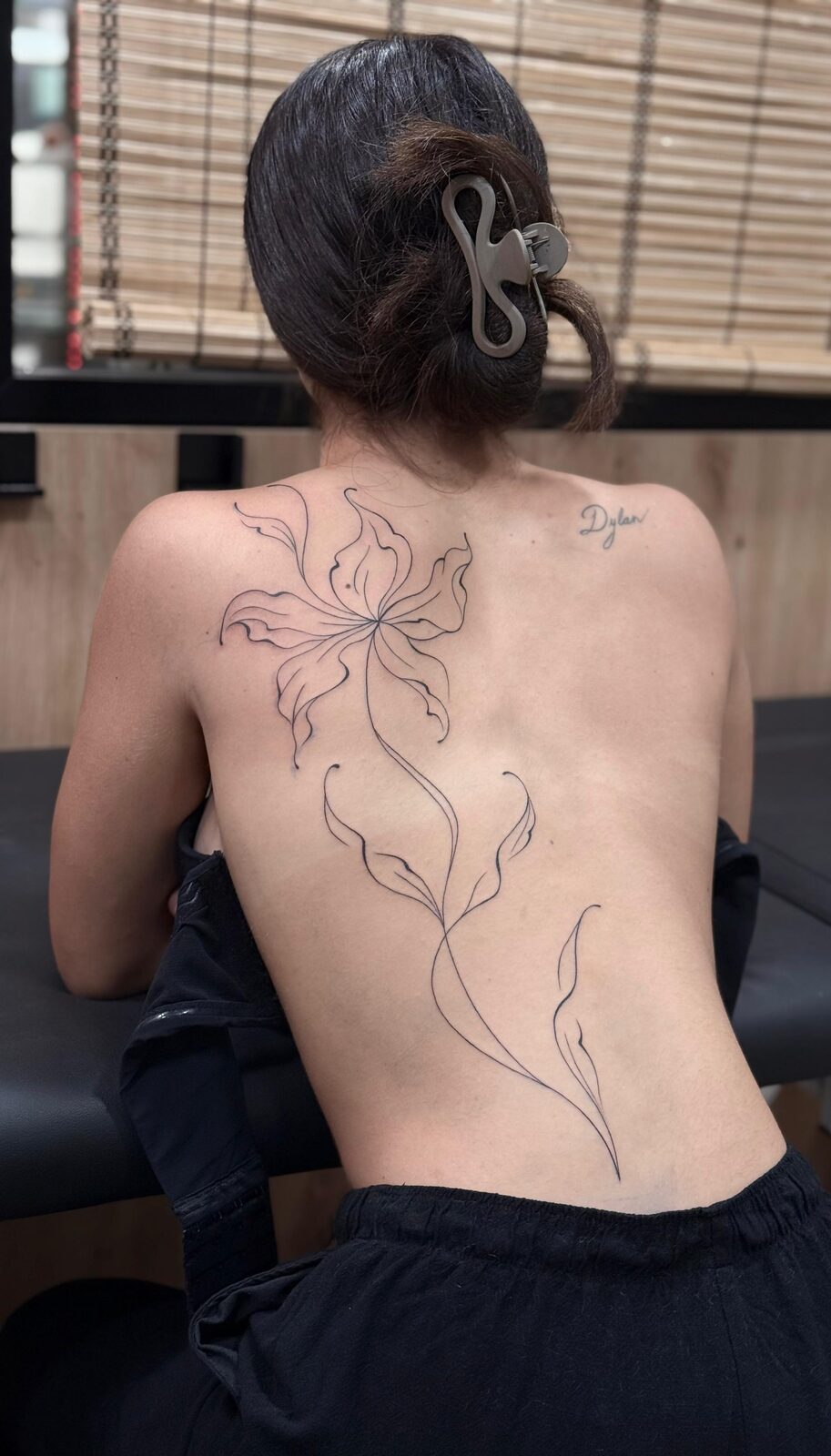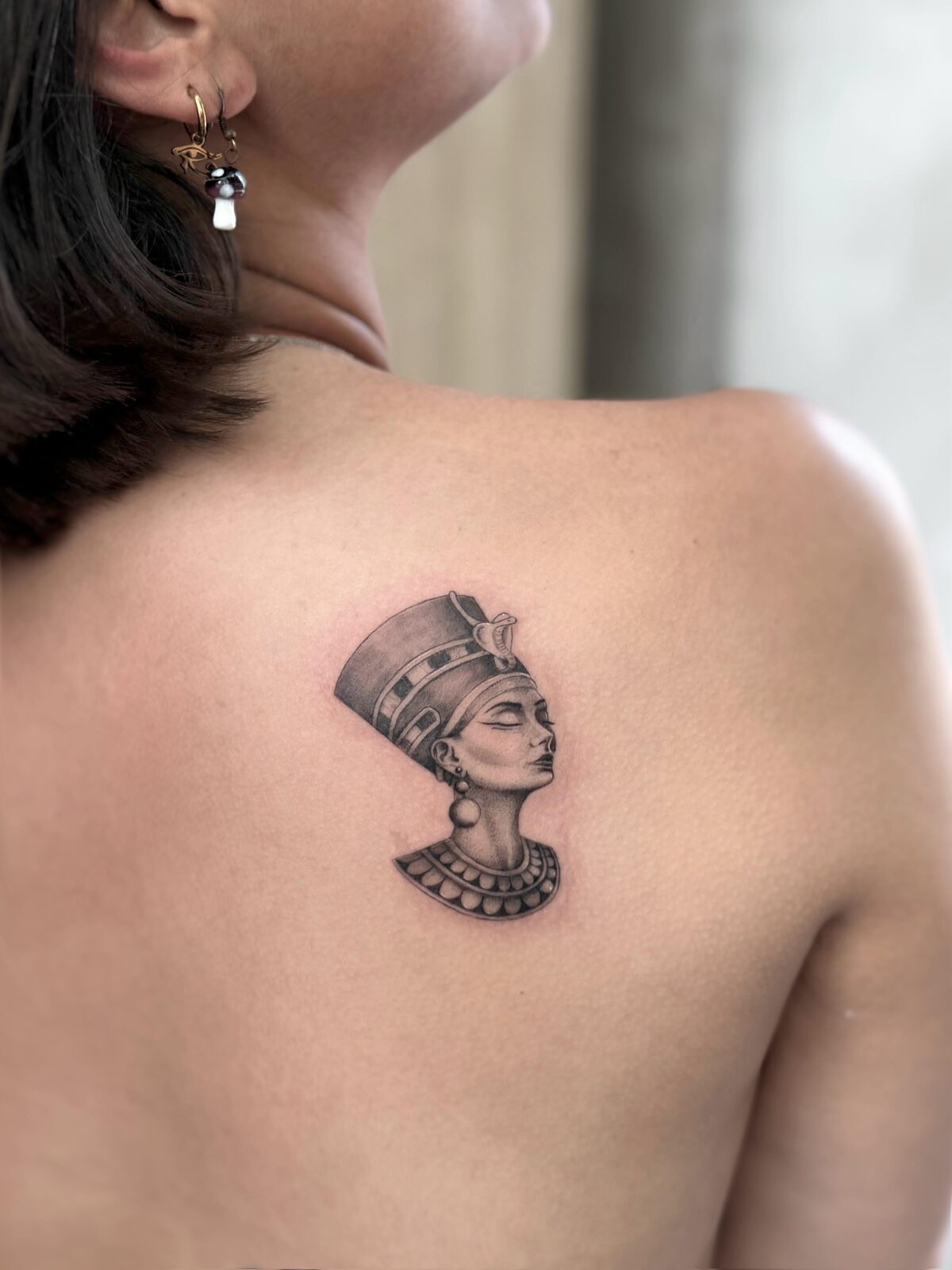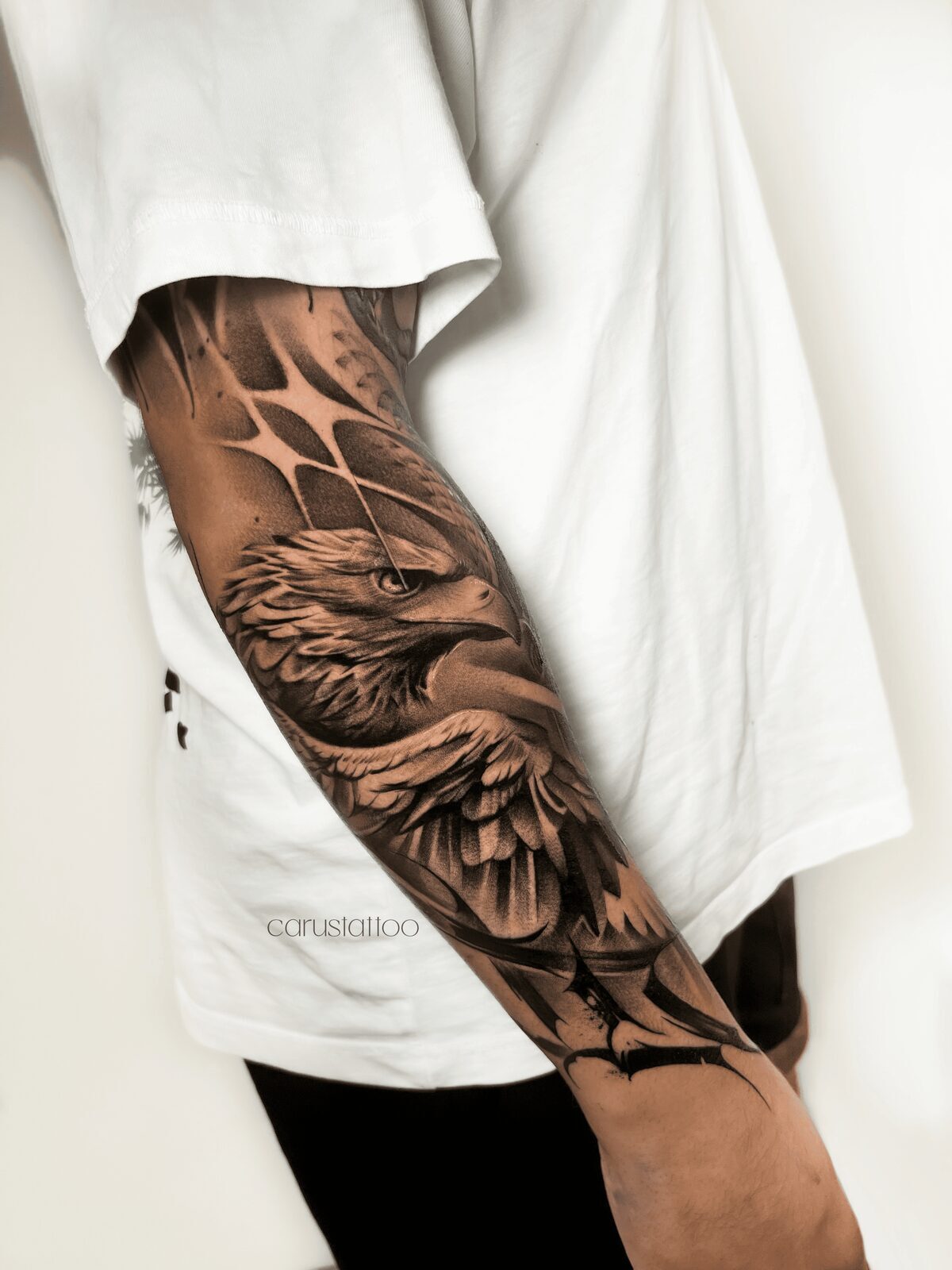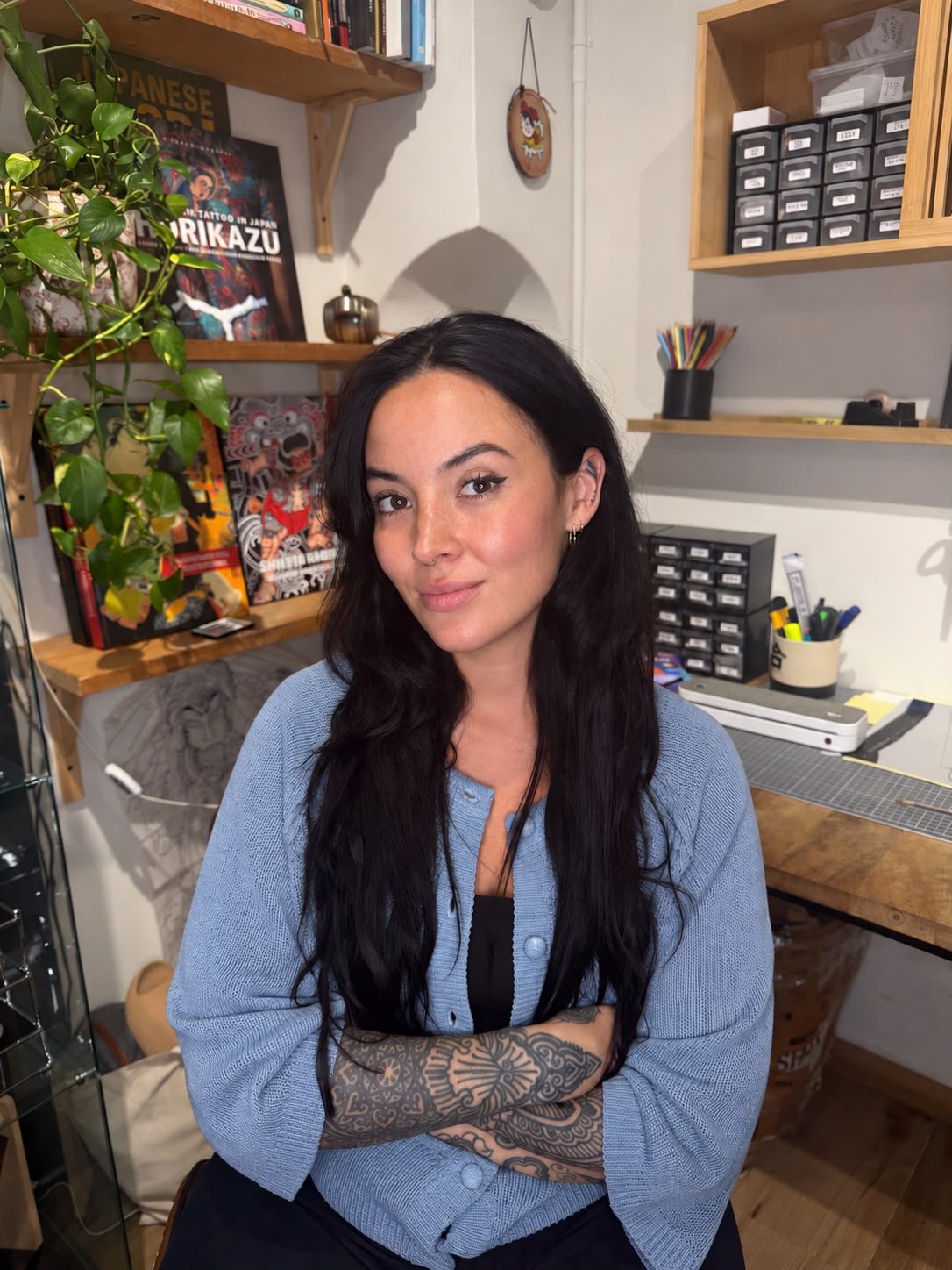
Andrea
Japanese and fine line tattooing
@andreahasu
Styles
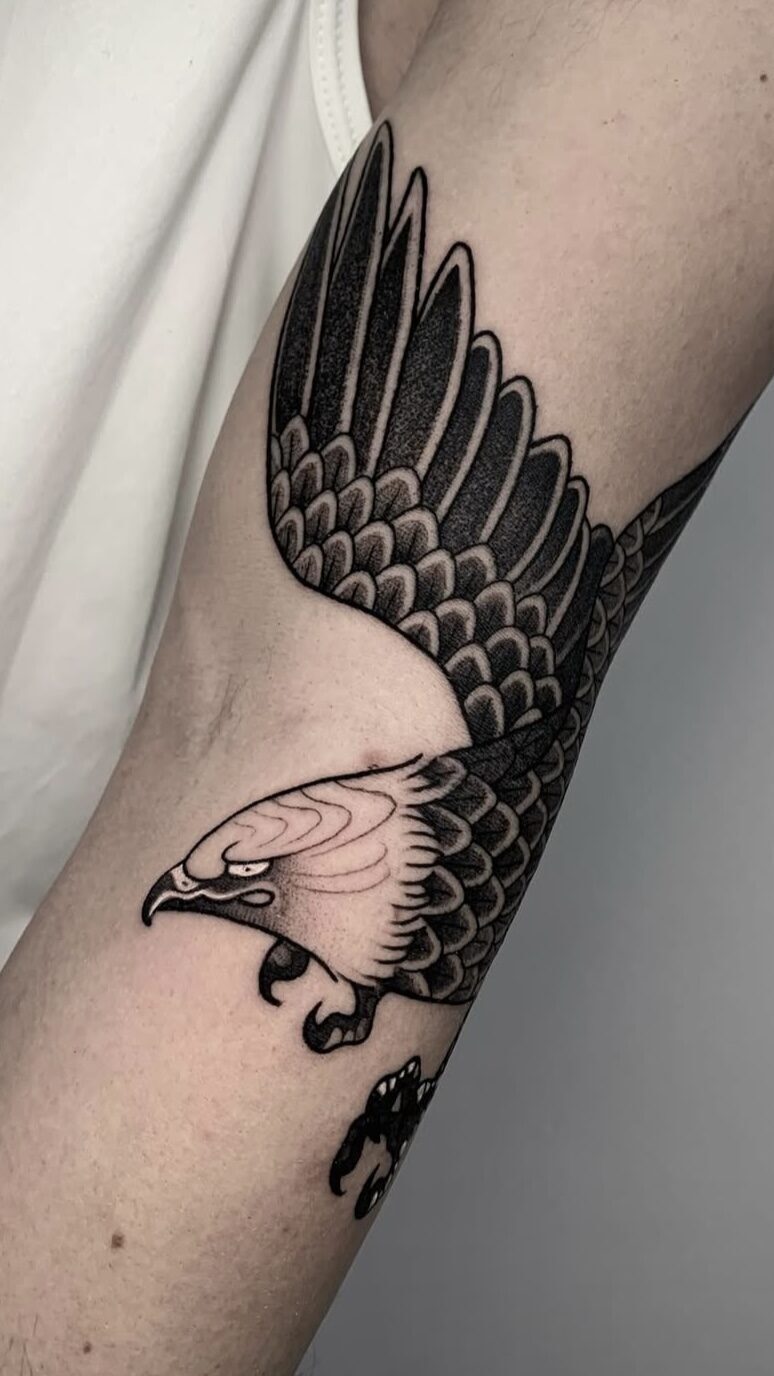
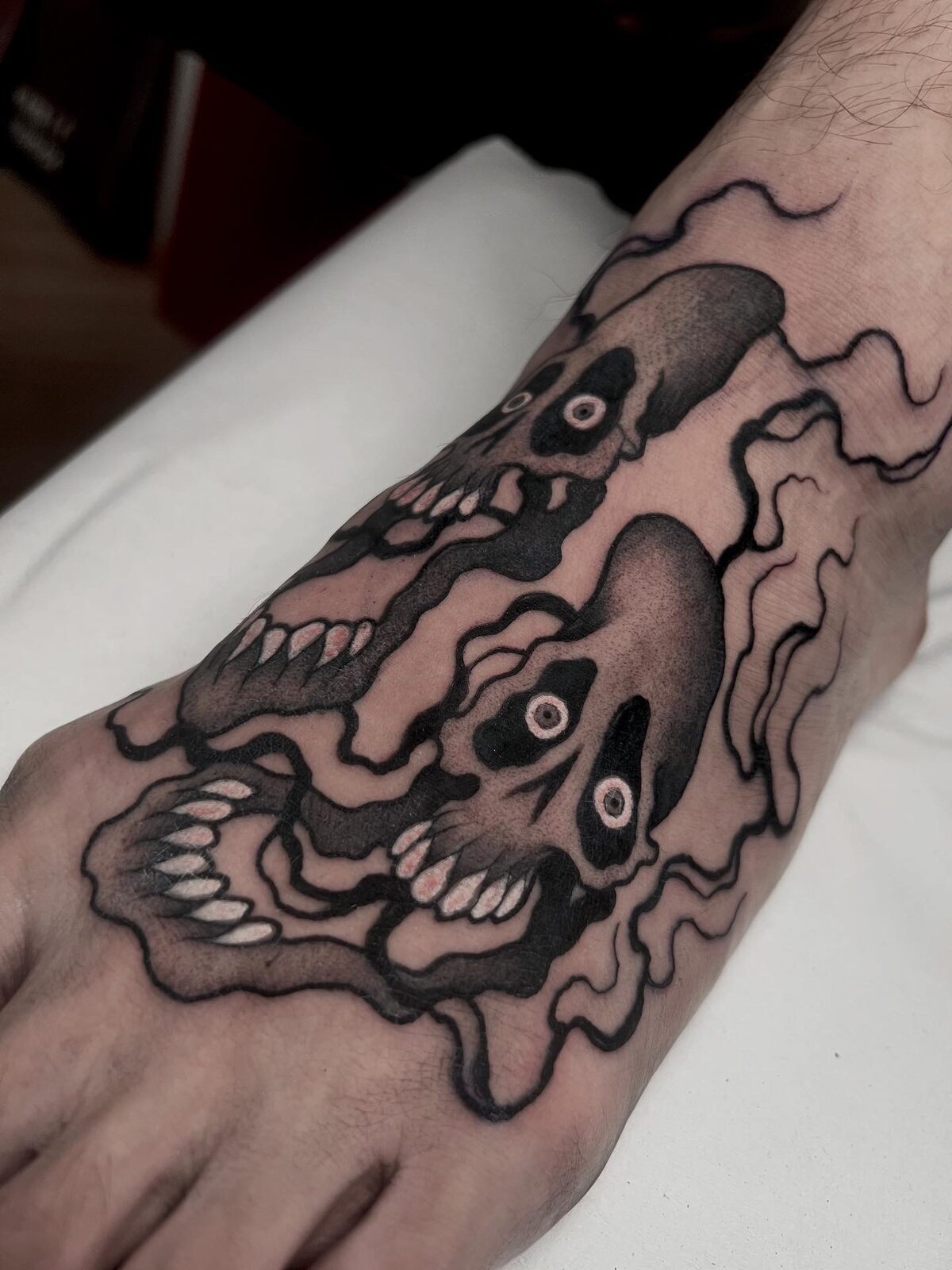
Japanese tattooing is not a catalogue of drawings, it is a system. Every motif carries a meaning, a place on the body where it works best, and a way of combining with the rest of the piece. That is why a well-executed Japanese tattoo reads as a whole from a distance and still holds detail up close.
At Minka we do both single pieces and long, multi-session projects. If you come in with a sleeve or a full back in mind, the first step is sitting down to plan the composition: the main motif, the background, how the skin breathes and how many sessions it takes.
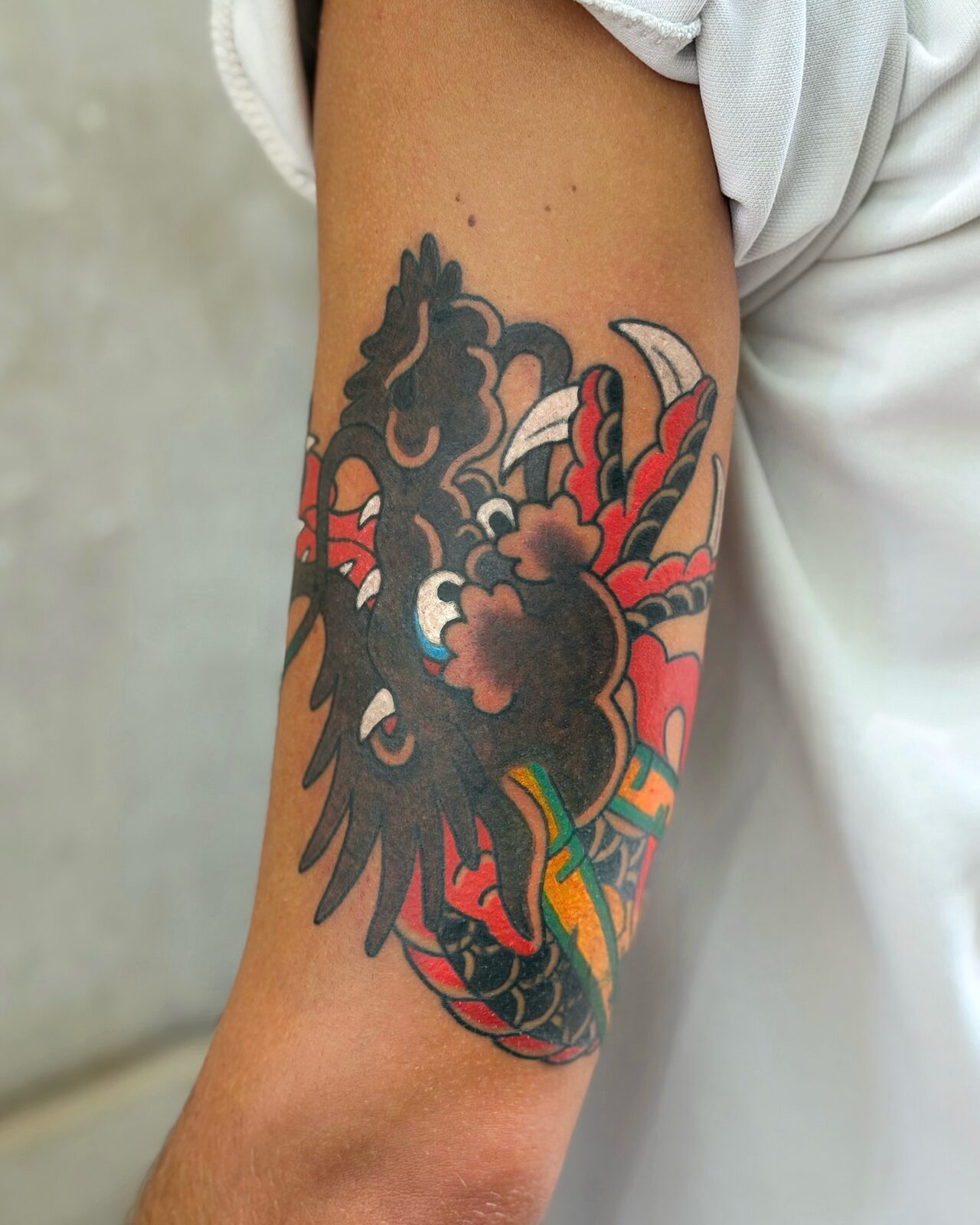
We design the piece on the specific area of the body, not on a flat sheet of paper.
Sleeves, legs and backs planned from the start, with a clear schedule.
We work both routes, depending on what the piece asks for and your skin tone.
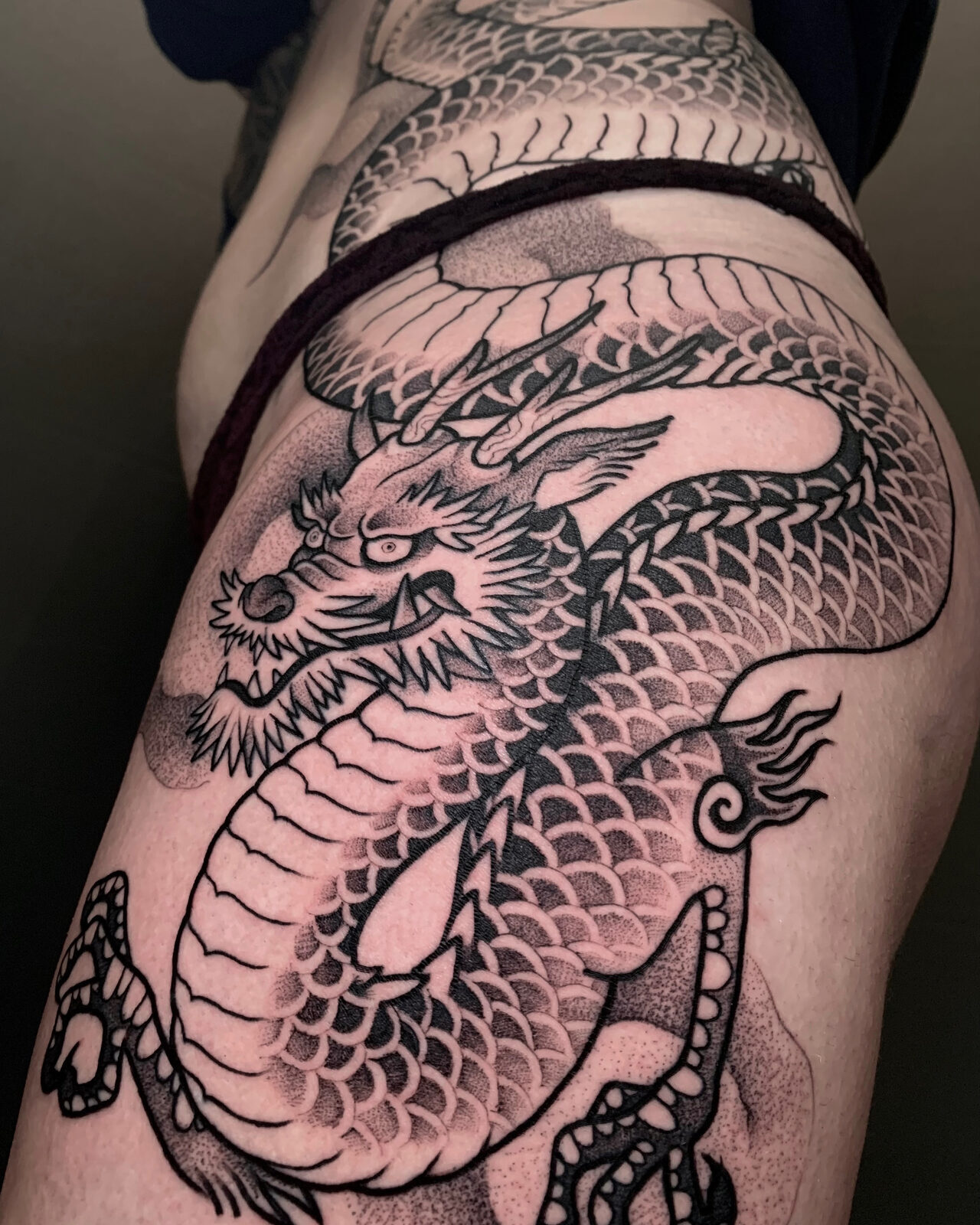
Japanese tattooing, or irezumi, draws directly on the ukiyo-e woodblock prints of the Edo period: heroes, creatures and legendary scenes drawn with bold outlines, flat colour and a composition designed to read at a glance. That is where its visual power comes from, and also its durability, because firm lines and solid areas hold up over the years far better than tiny detail.
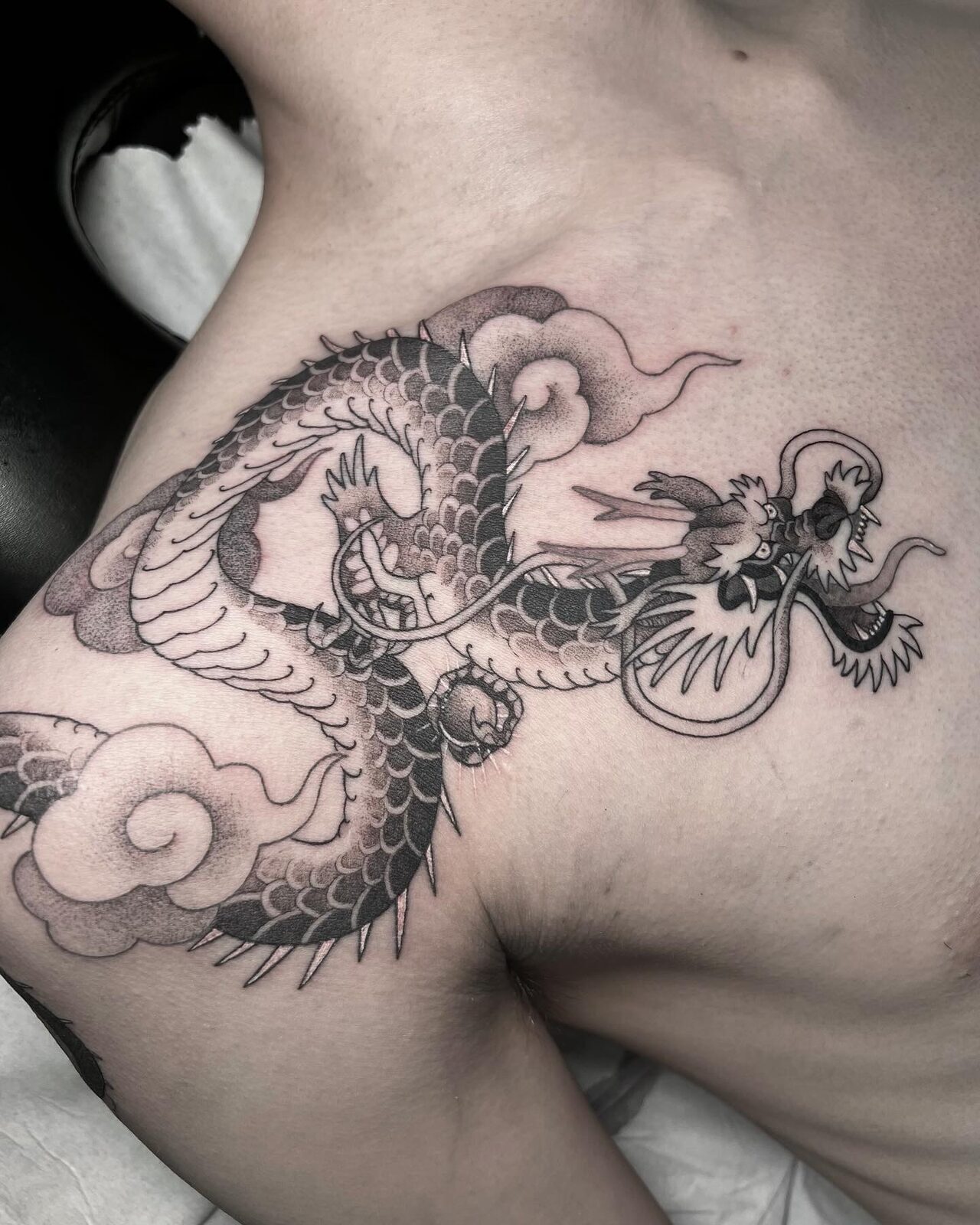
What sets it apart from other styles is that every piece has two layers: the main motif (a dragon, a carp, a mask) and the background that ties everything together, made of water, wind and clouds. That background is what lets a sleeve or a back read as a single work rather than separate tattoos stuck side by side.
Every motif carries centuries of symbolism, and it is worth knowing it before you choose. The koi swimming upstream speaks of perseverance; the dragon, of strength and wisdom; the tiger, of courage and protection. The hannya mask represents jealousy and rage, and is often worn as a charm against bad luck.
Flowers have their own meaning too: the peony is linked to prosperity and living without fear, and the cherry blossom to the fleeting nature of life. Combining them is not just about looks. A good Japanese design tells a coherent story from start to finish, and in the consultation we help you make yours hang together.
Japanese work looks better the more room it has: full sleeve, half sleeve, thigh, calf or back. Pieces are designed to follow the direction of the muscle, so the dragon wraps around the arm and the water falls in the natural direction of the body.
A full sleeve is spread over several sessions across months: first the outline of the whole piece, then the shading and background, and finally the colour. Working this way lets the skin rest between sessions and lets you set the pace to suit your schedule. We also do smaller standalone pieces, designed so they can later grow and join a bigger project.
Japanese pieces are usually quoted per session. Send us the idea, the placement and the size and we will give you an estimate.
Popular themes in japanese tattoo
It depends on the size, the level of detail and whether it has colour, but a full sleeve usually takes several long sessions spread over several months. In the consultation we give you a realistic estimate and plan the order of work.
Yes. A koi, a flower or a mask work well at a medium size, for example on the forearm or calf. What we would not recommend is shrinking it too far: Japanese style needs room to keep reading well over the years.
Both are traditional. Colour gives the classic look of Japanese prints; black and grey is more understated and works very well on darker skin. We decide together based on the design and your skin.
Often, yes. We assess what you already have from photos and design the background to join it with the new work. If any part is in poor condition, we suggest how to integrate it.
Sagrada Familia · Barcelona
Send it over on WhatsApp with a reference, the placement and an approximate size. We will reply with a quote and availability.